

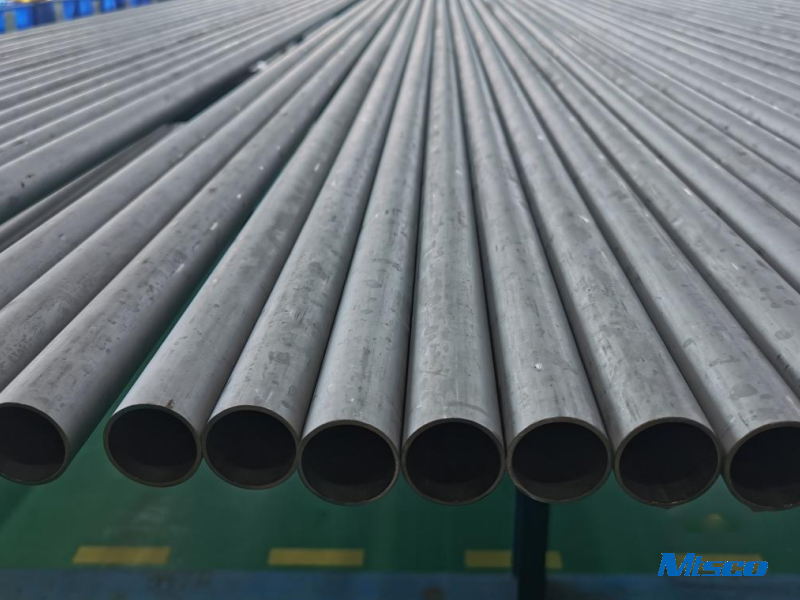
ASTM B163 N4 ALLOY 201 / UNS N02201 ALEA DE Níquel Tubo sin costuras / soldado con superficie AP
Características:
Nickel 201 is the low-carbon version of Nickel 200. Because of its low carbon content, Nickel 201 is not subject to embrittlement by intergranularly precipitated carbon or graphite when exposed to temperatures of 315 to 760℃ for prolonged time if carbonaceous materials are not in contact with it. Therefore, it is a substitute for Nickel 200 in Applications above 315℃. However it does suffer from intergranular embrittlement by sulfur compounds at temperatures above 315℃. Sodium peroxide can be used to change them to sulfates to counteract their effect.
Aplicaciones:
Componentes electrónicos, evaporadores cáusticos, barcos de combustión y barras de plateral.
Composición química de níquel 201
| % | Ni | Fe | C | Mn | Si | S | Cu |
| mínimo | 99 | ||||||
| máximo | 0.4 | 0.02 | 0.35 | 0.35 | 0.01 | 0.25 |
Níquel 201 Propiedades físicas
| Densidad | 8,89 g/cm3 |
| Rango de fusión | 1435-1446℃ |

Prueba de tubo de aleación de níquel:
1. NTD (prueba ultrasónica, prueba de corriente de Eddy)
2. Prueba mecánica (prueba de tensión, prueba de abofetaje, prueba de aplanamiento, prueba de dureza, prueba hidráulica)
3. Prueba de metal (análisis metalográfico, prueba de impacto - temperatura alta/baja)
4. Análisis químico (espectroscópico de emisión fotoeléctrica)